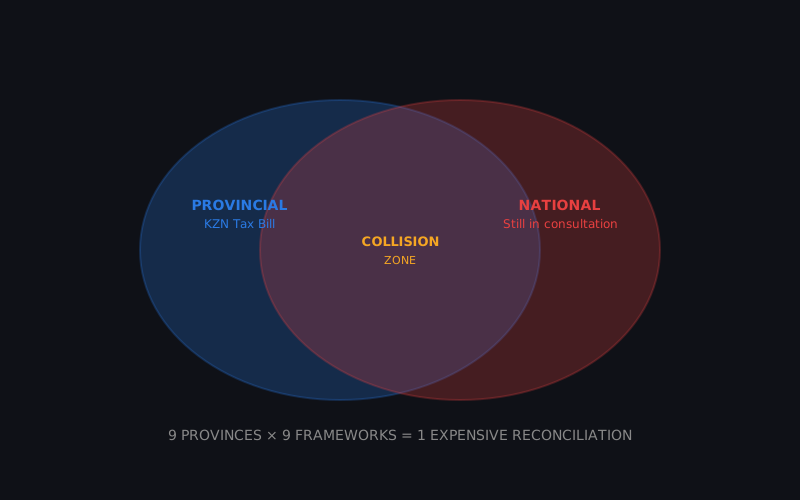
A province cannot license what the national government has not decided.
But it can tax it.
KwaZulu-Natal presented its Gaming and Betting Tax Bill to the Provincial Legislature on June 4. The bill creates a structured system of taxes and levies for the gambling and betting sector, expected to generate between R50m and R100m annually. The legislation explicitly notes the "absence of a comprehensive national framework" for online gambling - and proceeds anyway.
This is not unusual. Mpumalanga has done it. Gauteng has signalled it wants to. Provinces collect revenue from gambling activities within their jurisdictions. The problem is that online gambling does not stay within jurisdictions.
A player in KwaZulu-Natal can access a betting platform licensed in Malta. The platform's server is in Estonia. The payment goes through a Curacao-registered processor. The province wants a cut of this.
South Africa's national online gambling framework is still in consultation. The National Treasury's 20% GGR proposal was extended to February 2026. It has not become law. It may not become law this year.
What KZN is building in the interim is not just a tax structure. It is a precedent. Nine provinces, nine frameworks, before the national parliament has decided what online gambling is in South Africa.
I have worked in markets where provincial and national frameworks developed in parallel and then collided. The operators caught between them do not thank either side for the creativity.
The argument for national urgency is not regulatory. It is structural. The longer the national vacuum persists, the more the provinces fill it - and the more expensive the eventual reconciliation becomes.