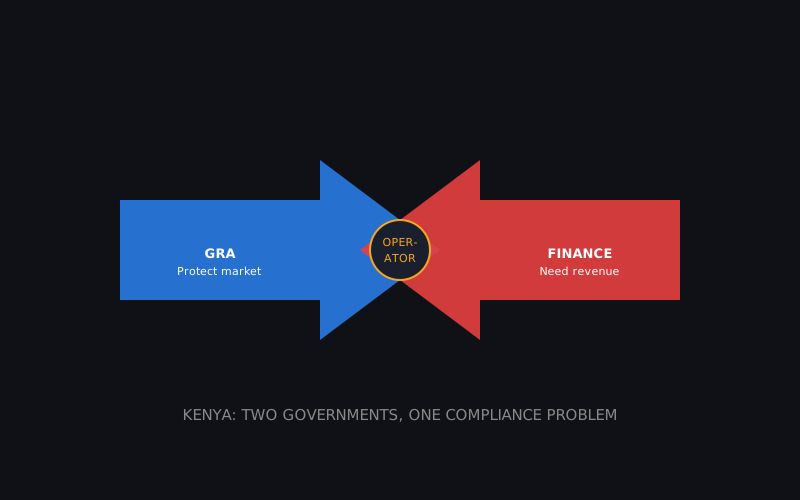
When your regulator lobbies against your Finance Bill, you don't have a tax problem. You have an architecture problem.
Kenya's Gambling Regulatory Authority is opposing the Finance Bill 2026. The bill proposes a 20% withholding tax on gambling winnings - the third redesign of Kenya's gambling tax structure in two years.
The GRA's position: the Finance Act 2025 framework works. It improved collection. The proposed change is unenforceable and will push players toward unregulated platforms.
The Finance Ministry's position: we need the revenue.
Both are right about their part of the problem. Neither is wrong. And that is exactly the issue.
In markets where gambling regulation is split between a licensing agency and a revenue ministry, operators don't face one government. They face two governments that measure success differently and answer to different committees.
You can comply perfectly with the GRA's framework and still be exposed under the Finance Bill. You can structure for the Finance Bill and find your CRM mechanics violate the GRA's responsible gambling rules.
This is not unique to Kenya. It is the default architecture of any market that built its licensing framework before it built its tax framework - or the other way around. Kenya is showing it in real time, with the regulator publicly on record opposing the latest version.
For operators building African entry models: the question is not "what are the rules?" The question is which ministry wrote them - and what does the other one want?
That gap is where most entry cases lose money before they go live.