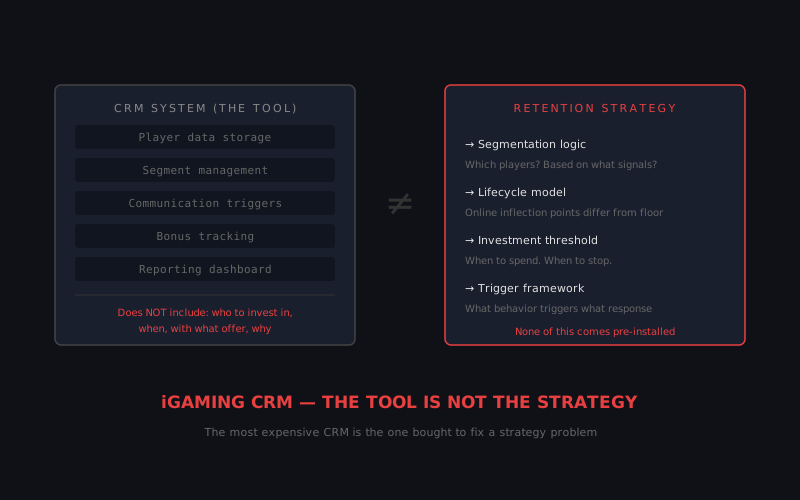
Most iGaming operators have a CRM system. Fewer have a retention strategy. These are not the same thing, and the difference is not subtle.
A CRM system is a tool. It stores player data, manages segments, triggers communications, tracks bonus spend. It does this reliably, and the larger vendors do it at scale. What a CRM system does not do is decide which players to invest in, at what point in their lifecycle, with what offer, based on which behavioral signal. That is the strategy. It does not come pre-installed.
The most visible symptom of CRM without strategy is bonus abuse. When retention budget flows to the wrong players - high-frequency, low-deposit, multi-account, bonus-strip-and-churn - the problem is not the bonus structure. The problem is the segmentation logic upstream of the bonus. Bad segmentation amplifies every retention spend error.
The regulatory pressure on bonuses across the UK, Netherlands, and other maturing markets is not a threat to CRM. It is an audit. It separates operators with actual retention strategies from operators who were running acquisition campaigns funded from the retention budget. Operators who lose performance when bonus depth is constrained never had retention. They had a discount programme.
The UK prize draw case makes the same point from a different angle. A channel that sits outside the regulatory perimeter looks attractive at the top of the funnel. But a CRM strategy built on regulatory arbitrage has a fixed lifespan. The question to ask before building on a loophole is: what does the retention infrastructure look like when it closes?
Player lifecycle management online has different inflection points than in a physical environment. The platform and data architecture determines what lifecycle signals are available to act on. Operators who discover this after signing a five-year platform agreement discover it at an inconvenient time.
The real cost of bad CRM is invisible. It does not show up as a complaint. It shows up as a player who never came back, and the absence of a player generates no alert in any system.
The cheapest CRM investment is the segmentation framework you build before the tool goes live. The most expensive is the tool you buy to fix a strategy problem.