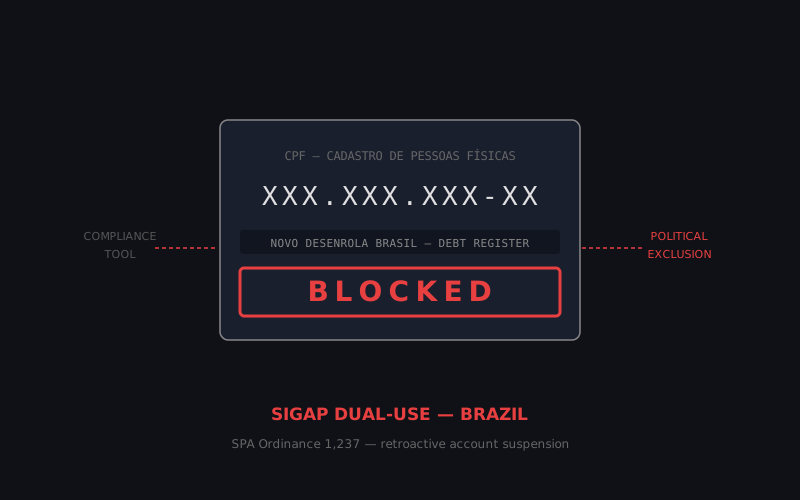
There is a name for state-built compliance infrastructure that turns out to be reusable for political exclusion. The name is dual-use.
Brazil's regulated online gambling market is seventeen months old. SPA Ordinance 1,237 and Normative Instruction 3 came into force on May 5. They introduced the Sigap Barred Persons Module — a CPF-matching system that cross-references registered players against the Novo Desenrola Brasil debt relief register. Operators had ten days to plug in.
The compliance rationale is straightforward: player protection, problem gambling prevention, financial risk management. All reasonable. All standard.
The detail that the trade press skipped is that SPA Ordinance 1,237 makes the Sigap block retroactive. A player already registered with a CPF that later appears on the Novo Desenrola list must have their existing account suspended — not just blocked from new registration. The platform has to reach back into its active player base and act on a government register it did not build, cannot audit, and does not control.
Novo Desenrola Brasil was structured with a 1.99% monthly interest cap and up to 90% debt discounts. The debt register is large. The overlap with an active online gambling population is not zero.
The Netherlands comparison is instructive. Cruks — the Dutch central exclusion register — runs on court orders, voluntary self-exclusion, and operator referrals. The data source is gambling-specific. Sigap's data source is a debt-relief programme administered by a separate ministry. The compliance architecture is identical in form. The political exposure is different in kind.
This is not a Brazil problem. It is a design problem that Brazil is surfacing first.
Any operator entering a regulated market where the licensing authority can connect its player verification system to registers it does not control is carrying an integration dependency that is invisible at launch and visible at audit.
The Sigap Barred Persons Module works as described. That is not reassurance. That is the condition.