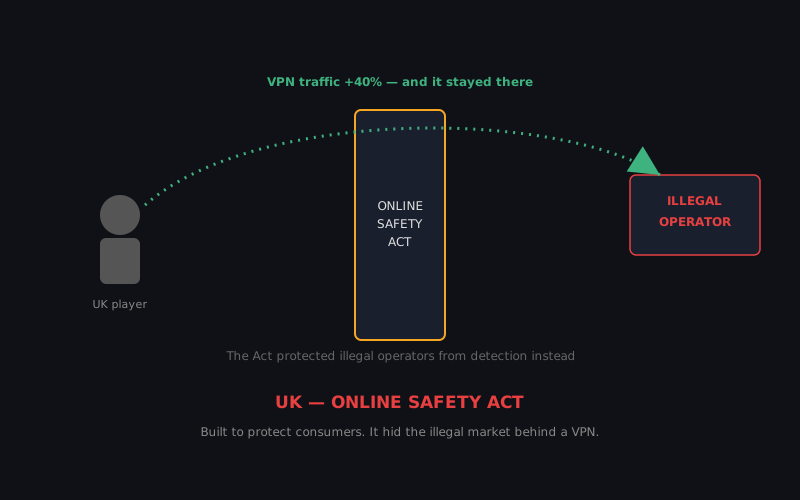
Britain built a law to protect consumers from illegal content.
It protected illegal gambling operators from detection instead.
The Online Safety Act came into force in July 2025. VPN use spiked 40% that month, then stabilised at levels 40% above pre-Act norms. VPN providers were not running a gambling campaign. They were running a privacy campaign. And it worked.
The UKGC published 21 months of trend data on illegal gambling engagement in April. The headline finding: no structural rise in activity. No sustained growth. Which sounds reassuring until you read the footnote.
The footnote says confidence intervals got significantly larger from mid-2025 onwards. The regulator had applied a 30% uplift to account for VPN-hidden traffic. Now it is not sure 30% is enough.
H2 Gambling Capital estimated £16.6 billion in stakes with unlicensed operators in the UK in 2025. Triple the 2019 figure. This covers years of sustained enforcement effort, taskforce formation, payment blocking, domain takedowns, and cross-platform collaboration.
The UKGC's own language: "these estimates are more effective in indicating trends than predicting precise engagement volumes." Which is regulator-speak for: we know the direction but not the scale of the problem.
This is not an enforcement failure. It is an architectural problem. Consumer privacy tools and regulatory surveillance tools pull in opposite directions. You cannot make the internet safer for consumers without making consumers harder to track. That trade-off was always there. The Online Safety Act accelerated it.
The Illegal Gambling Taskforce's three objectives - block payments, remove marketing, cross-agency enforcement - are all supply-side interventions. They assume the regulator can see what it is trying to disrupt.
The VPN data suggests it cannot.
#iGaming #iGamingCompliance #GamblingRegulation #KyborgAI #UKGambling #BlackMarket #UKGC