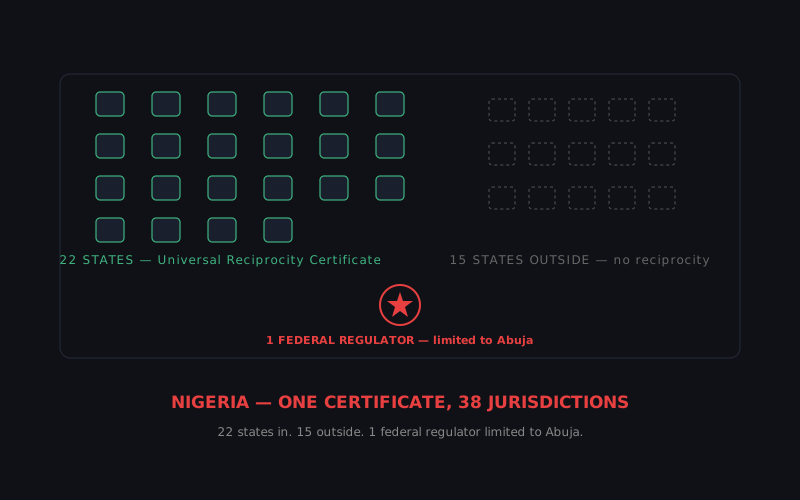
22 states. 15 outside. 1 federal regulator limited to Abuja.
Nigeria called this simplification.
The Federation of State Gaming Regulators of Nigeria launched the Universal Reciprocity Certificate last year. A single license. 22 member states. 11% GGR tax across all verticals. Annual license fees of N100 million per category.
For operators who had been navigating Nigeria's fragmented pre-Supreme Court landscape - state by state, regulator by regulator - this sounded like good news.
It is partially good news. If your operation sits in Lagos, Rivers, Ogun, or the other 19 FSGRN member states, the URC gives you a genuine unified compliance framework. One application. One renewal. Consistent rules.
The rest of Nigeria - 15 states and the FCT, now the sole territory of the national NLRC - is still doing its own thing. Some have existing licensing frameworks. Some are building new ones. Some have no active regulatory structure at all.
An operator entering Nigeria on the strength of the "one license" pitch now holds a URC that is valid in 22 states and tells them nothing about Kano, Katsina, Borno, and the rest. Depending on your customer geography, that coverage gap is either manageable or the centre of your compliance exposure.
Nigeria did not solve its regulatory fragmentation problem.
It solved 22 states of it.