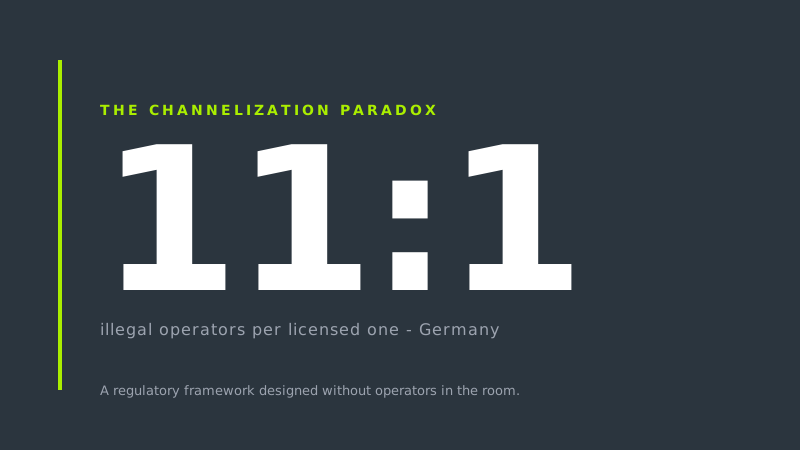
Germany has 11 illegal gambling operators for every licensed one. This is not a market failure. It is the direct output of a regulatory framework designed without operators in the room.
LUGAS, stake limits, the identity verification requirements - each individual measure has a coherent compliance logic. Together, they produced a licensed product that is measurably inferior to the unlicensed alternative for the players who make up the bulk of gambling revenue. The result is a ratio that any operator could have predicted before the framework was implemented.
Brazil is running the same experiment with a different mechanism. The 15% deposit tax makes the licensed channel structurally more expensive than the gray market. The regulator has created a channelization problem with the tool that was supposed to solve it.
Portugal went the other direction. Land-based operators were given the framework to compete online. Licensing gave operators room to build a product worth choosing. The channelization numbers moved because the licensed product was competitive, not because the unlicensed market was policed.
The pattern is consistent: channelization is a product design problem at the regulatory level, not a policing problem. A framework that makes the licensed option worse than the alternative - on price, on experience, on friction - is not a channelization strategy. It is an attrition strategy for the licensed market.
Germany's 11:1 ratio is the number. But the real question is: who owns the answer?