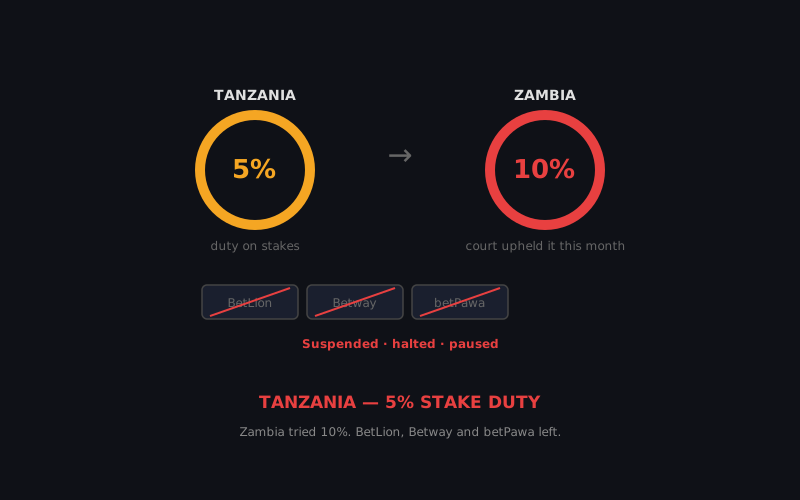
Tanzania just introduced a 5% duty on betting stakes.
Zambia tried 10%. You know how that ended.
Zambia's Revenue Authority confirmed a court upheld the 10% stake excise this month. BetLion suspended operations. Betway halted services. betPawa paused casino and jackpot products. The operators did not leave because of the headline tax rate. They left because of what a stake-based tax does to the underlying economics.
A stake-based tax is not a revenue tax. It applies to every bet placed - win or lose, margin or no margin. For a sportsbook running at a 5-7% net margin on sports, a 5% stake duty is not a charge on profit. It is a charge on the cost of operating.
Tanzania's Ministry of Finance expects TZS74.5 billion ($28.4 million) in new revenue from July 1. Ten percent of that goes to the Gaming Board of Tanzania "to improve efficiency and regulation of gambling activities."
What the Ministry has not published - or has not modeled - is the GGR margin compression at each product category. Live betting margins run below 5%. The math on that is not complicated.
Tanzania will collect less than projected. Licensed operators will factor market commitment decisions accordingly. Unlicensed operators will not.
Two East African markets in twelve months chose the same model. Zambia in 2025. Tanzania now. This is not coincidence. It is a template.
The question is not whether this works. The question is which country writes it third.