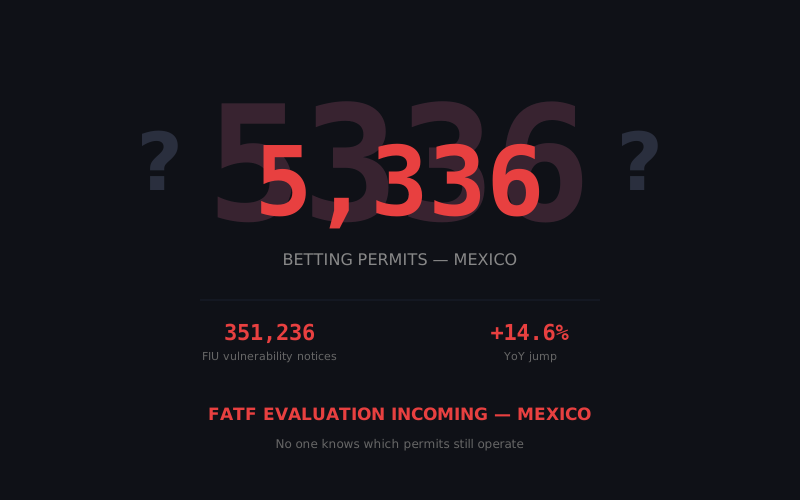
Mexico has 5,336 betting permits. No one knows which ones still operate.
That sentence is the FATF problem in one line.
PRI legislator Alejandro Moreno Cárdenas filed a resolution asking the Ministry of the Interior (Segob) to publish a comprehensive registry of all active gambling operators — open data format, broken down by state. The 1947 Federal Gaming and Sweepstakes Law, which still governs the sector, does not require this.
Mexico's Financial Intelligence Unit recorded 351,236 vulnerability notices in the first nine months of last year — a 14.6% year-on-year jump. OFAC sanctioned 27 entities. Ten Mexican betting houses were flagged for $2 million in cash-chip cycles between 2017 and 2024. The FATF mutual evaluation is incoming.
The Moreira proposal contains four operational points. Three are normal good governance: publish the register, maintain it in open data format, break it down by state. The fourth is the one nobody comments on: disclose the universe of electronic platforms authorised to legally offer betting services.
The 1947 statute does not define one. There is no category in Mexican law for an "electronic betting platform." There is no licensing pathway that creates one. So the technically correct answer to "how many electronic platforms are legally authorised to operate in Mexico" is: zero. The ones that exist operate under interpretations of a land-based framework that predates the internet by decades.
That is the FATF problem in one sentence.
The mutual evaluation will look for a licensing framework. It will find a permit system designed for horse racing tracks, applied to an online gambling market with 5,336 authorisations and no verified active operator list.
The Moreira resolution is not going to fix that. It is, however, going to make the gap visible on the record before the evaluators arrive.
Operators holding permits in Mexico should understand what they hold: an interpretation, not a licence. The difference matters when an international body asks to see the authorisation framework.