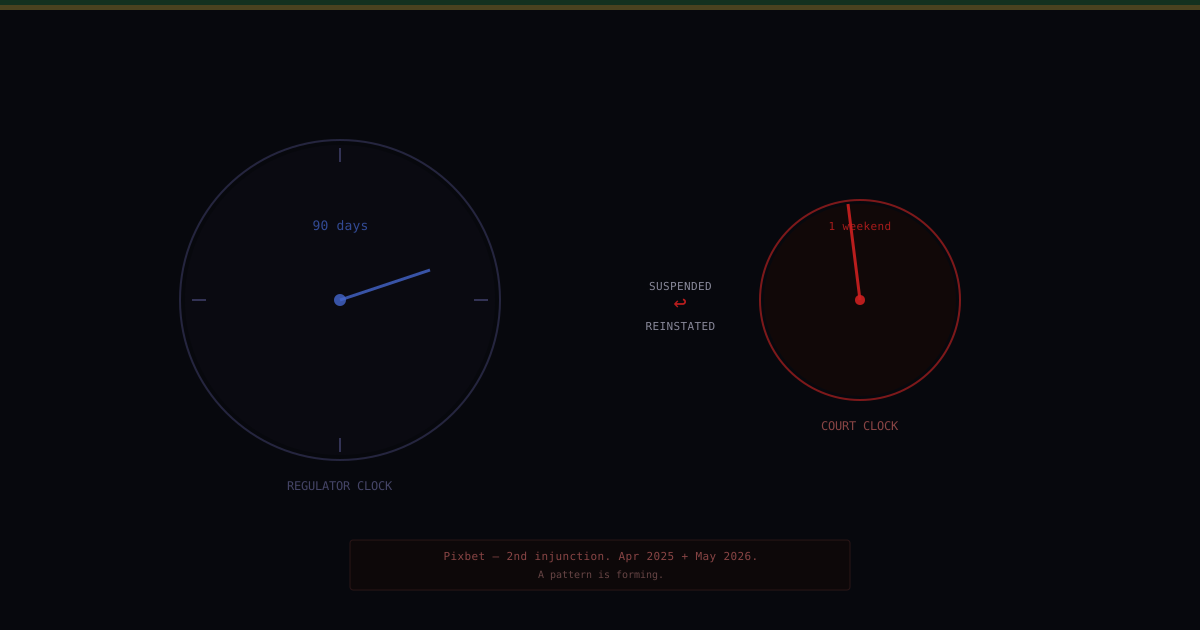
Saturday Brazil suspended seven betting operators. Sunday five of them were back online.
The Secretariat of Prizes and Betting decreed the suspensions on May 30. The reason was a missed deadline on the 90-day cybersecurity assessment report. The instrument is real, the deadline is real, the daily fine of R$40,000 is real, the list of suspended brands included Pixbet (main sponsor of Flamengo) and BETesporte (sponsor of the Paulista and Carioca championships).
The judicial reversal arrived on Saturday night. Judge Leonardo Tavares Saraiva, sitting in the 3rd Federal Civil Court of the Federal District, granted Pixbet a preliminary injunction under the doctrine of periculum in mora. Translated: danger of delay. The specific danger was that Pixbet would miss the weekend's football fixtures. By Sunday morning Pixbet, Flabet and Bet dá Sorte were taking bets again. Several other suspended operators secured equivalent relief in parallel proceedings. As of the following day two of the original seven remained suspended.
For Pixbet this is the second time. The first reversal was April 11 of last year, also via federal court injunction, also overturning an SPA enforcement ordinance. A pattern is forming. The regulator's enforcement architecture is real. It also reliably loses on injunctive relief when the operator has a weekend fixture and a Brasília litigation team.
The implication for operators preparing for the World Cup is uncomfortable. The compliance posture you build for a regulator that can suspend you in twenty-four hours is different from the compliance posture you build for a regulator that suspends you in twenty-four hours and is overturned in another twenty-four. Your CRM has to know which of the two regulatory environments you actually operate in. Most do not.
The regulator's clock is ninety days. The court's clock is one weekend. The operators who price both correctly will pay for the compliance, file the report, and never be in the news.