Curaçao always sold cheap licences.
The Q1 2026 bulletin says it is selling something else now.
The cowboy era ran on a simple model. A handful of master licensees sub-licensed thousands of operators with no real oversight. That is why so many operators picked Curaçao. Nobody was checking.
The LOK changed the regime. Direct licensing by the CGA. Risk-based supervision. AML questionnaires. A separate technical questionnaire for platform providers. ICE Barcelona engagement. Working visits to Malta and Cyprus. A working group with the local FIU on bulk reporting and digital assets. A public warning section on the regulator's website for domestic illegal offerings.
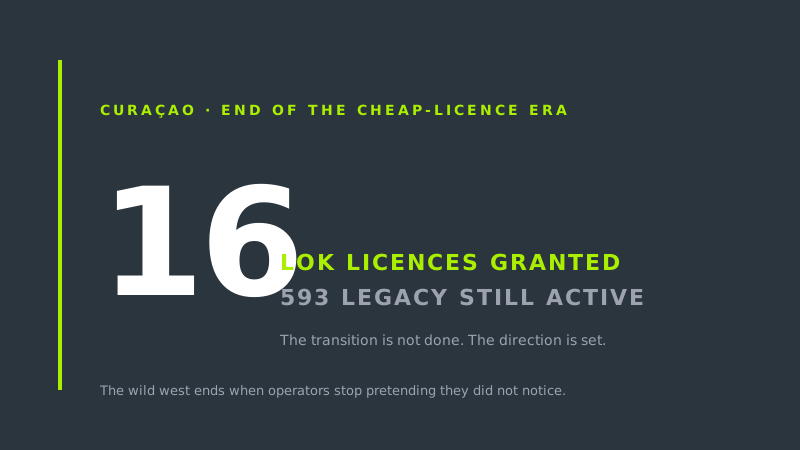
The numbers in the first quarterly bulletin (as of 31 March 2026): 16 LOK licences granted. 8 applications rejected. 7 withdrawn. 30 still in process. 593 legacy NOOGH licences still active.
The legacy book is roughly thirty-seven times larger than the new regime. The transition is not done. But the direction is set, and the shape of the next CGA looks closer to Malta in 2012 than Curaçao in 2018.
For operators who chose the jurisdiction because nobody was watching, the answer is no longer the same answer.
The wild west does not end when the regulator says so. It ends when the operators stop pretending they did not notice.