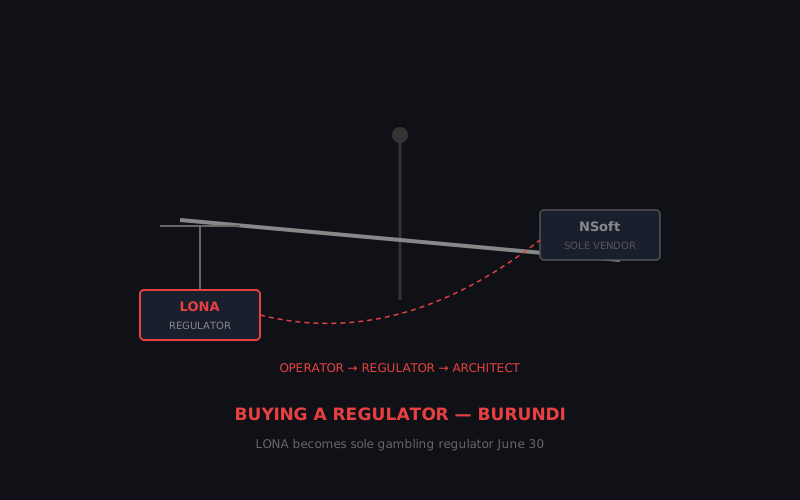
The cheapest way to build a regulator is to buy one. Burundi did.
LONA — Loterie Nationale du Burundi — stops being a commercial lottery on June 30. It becomes the sole gambling regulator. NSoft, a Sarajevo-based gaming management system provider, presented its GMS to LONA on February 27. The system covers player registration, operator turnover, jackpot payouts, declared revenues, and tax liabilities. Eight existing licensed providers — who were previously competing with LONA — will now be monitored by it.
The casino-oversight phase comes later.
That sequencing is the detail to watch.
NSoft GMS covers lotteries, sports betting, horse racing, and online products from day one. Casino sits in a later implementation tranche. Whoever holds the casino contract by phase two gets to define the data schema retroactively for every prior product category. The eight operators currently in the market will not negotiate that schema. The vendor that built the first half will.
This is how single supplier becomes single architect.
Burundi's situation is not unique. Liberia's LNLA signed Seven Blue under a similar logic: build regulatory infrastructure by partnering with a single commercial vendor, use that vendor's data architecture as the foundation for the monitoring framework, then extend the framework to additional product categories over time.
The compliance case for this model is straightforward. A lottery authority has existing infrastructure, government mandate, and zero time to build a bespoke regulatory stack from scratch. A GMS vendor has a product ready to deploy and an obvious commercial interest in being the foundation layer.
The structural risk is equally straightforward. A regulator that purchases its monitoring capability from a single vendor cannot independently audit that vendor's product. The regulator sees what the system shows it. The system was designed by the vendor. Audit capability is a function of independence. There is no independence here.
For the eight licensed operators: you are now regulated by the entity you used to compete with, using monitoring infrastructure you did not design, on a timeline set by a vendor who is about to build the next phase.
That is not a regulatory environment. It is a negotiation you are already losing.