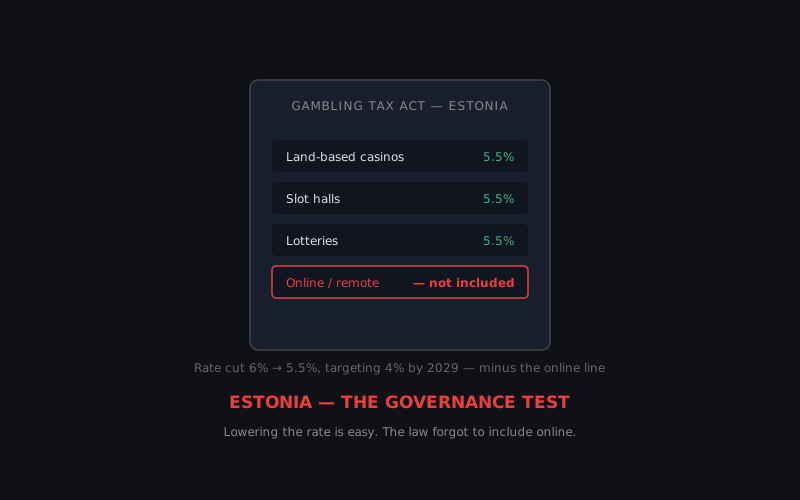
Lowering the tax rate is the easy part.
Writing the law correctly is the governance test.
Estonia phased its GGR gambling tax down from 6% to 5.5% this year, targeting 4% by 2029. The aim: become one of Europe's lowest-tax regulated markets and attract serious operators. A rational strategy. Hard to argue with the logic.
The execution: the legislation accidentally left out online gambling. Remote providers were not included in the 5.5% bracket. The government faced an estimated €4 million shortfall on social, sports, and cultural funding. A senior adviser was dismissed. And then something unusual happened - Estonian online gambling operators voluntarily forwarded over €1.4 million to the Ministry of Finance to cover what the government would have collected under a correctly written law.
Estonia is now pondering whether the tax cut was right.
That is the wrong question.
The right question is what operators read into a legislative error of that magnitude when they are evaluating a market for long-term investment. A licensing decision is not just a tax rate calculation. It is an assessment of regulatory intent matched against the competence of the institution that will implement it.
The Netherlands built competitive channelization and executed it. Germany built elegant theory and a broken implementation. Estonia is currently writing its entry in that comparison with a corrected law and a dismissed adviser.
The tax rate may reach 4%. Whether that matters depends on which category Estonia lands in.