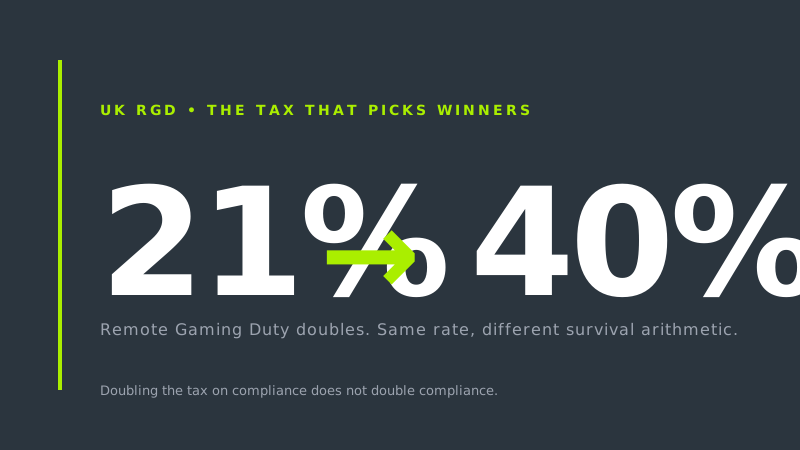
April 1. The UK doubled its Remote Gaming Duty. From 21% to 40%.
Flutter's response was already visible before the rate changed. Paddy Power marketing redundancies confirmed. 57 shops closing across Britain and Ireland. Sky Bet headquarters relocated to Malta. And Flutter's UK CEO said it on the record: "We'll take share from those who can't absorb it."
Read that sentence again. The world's largest gambling operator is telling you the tax will help them.
This is what a tax increase looks like when it lands on a market with asymmetric scale. Flutter has a NYSE listing and operations in 40+ countries. The mid-market operator running three UK brands has none of that. Same tax rate. Different survival arithmetic.
The UK government called gambling a "free hit" in the budget. It was. Not the kind they expected. The hit lands on licensed operators. The ones running KYC checks, affordability programmes, self-exclusion databases. The unlicensed market does not file UK tax returns.
So what does 40% RGD actually produce?
Fewer licensed operators. More concentrated market share among the survivors. A 20% cut in marketing spend across the board, which means less competition for player attention, which means less pressure to differentiate on product or player safety.
Germany is still arguing about whether channelization sits at 77% or 50%. The UK just demonstrated what happens when you stop debating and start taxing. The answer looks the same in both countries: the licensed market contracts until only the largest players remain.
Doubling the tax on compliance does not double compliance. It halves the number of companies willing to pay for it.