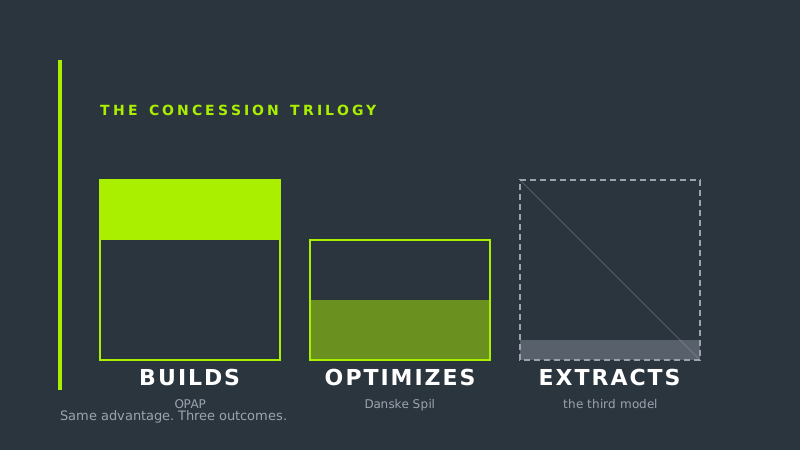
Three European gambling concessions reported 2025 results in the same month. The data tells three completely different stories about the same structural advantage.
OPAP in Greece: €2.4 billion in Gross Gaming Revenue. A 4.9% rise year-on-year. The iGaming segment grew 17% to €350.6 million - now 32% of total GGR. A merger with Allwyn is creating a combined entity valued at €16 billion. Profit dipped 0.5% because OPAP spent more on operations, marketing, and payroll. The concession holder is building.
Danske Spil in Denmark: Record net profit of DKK 2.01 billion despite declining GGR. Revenue fell. Profit rose. The state operator returned DKK 3.148 billion to Danish society through taxes, dividends, and lottery funding. Online casino grew while sports betting softened post-event cycles. The concession holder is optimizing.
Then there is the third model. The one where a concession holder reports a 95-100% dividend payout ratio. Where the estimated reinvestment rate sits at 3-6% against an industry standard of 15-20% for a growth-phase operator. Where the concession was never treated as the foundation of a business - the concession itself was treated as the business.
OPAP builds. Danske Spil optimizes. The third model extracts.
The same structural advantage - a state-granted position in a protected market - produces three fundamentally different outcomes depending on one variable: what the concession holder actually does with it.
The extraction machine works until there is nothing left to extract - or somebody turns it off.