Operators spend years getting licensed and then assume the license creates demand. It doesn't. The player who chose the unlicensed alternative didn't do it because they didn't know about you.
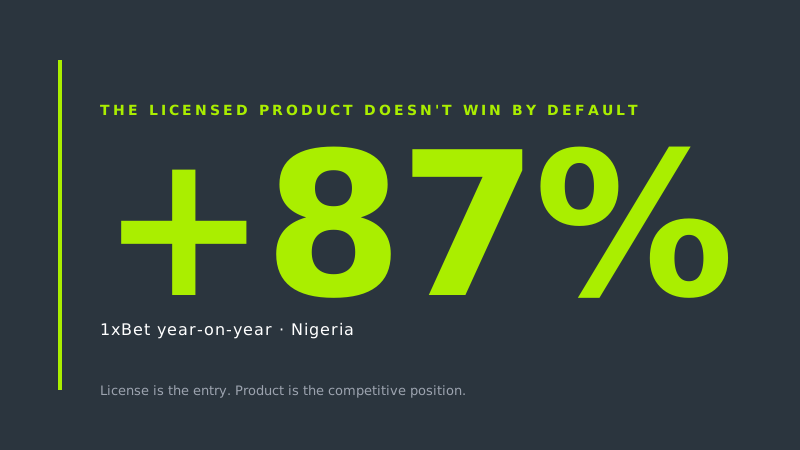
1xBet grew 87% year-on-year in Nigeria. Licensed operators are available in that market. The players aren't confused. They're choosing.
The assumption underneath most market entry strategies - that compliance equals legitimacy equals player preference - skips a step that matters. The step is product. Payment infrastructure that works for how players in that market actually move money. Localisation depth that goes further than a translated landing page. Trust signals that mean something to the specific audience, not the trust signals that satisfy a European regulatory checklist.
The licensed product loses in contested markets when it is demonstrably inferior in the features that matter to the player. A compliance certificate doesn't close that gap. Neither does brand recognition earned in a different geography. The 87% number is not evidence that players don't care about safety - it's evidence that when the licensed product doesn't compete on the dimensions players make decisions on, they make a different decision.
This is recoverable. But it requires building the product for the market, not adapting the product from the previous market. Those are different projects with different budgets and different timelines.
The license is the entry requirement. The product is the competitive position. Conflating them is expensive.