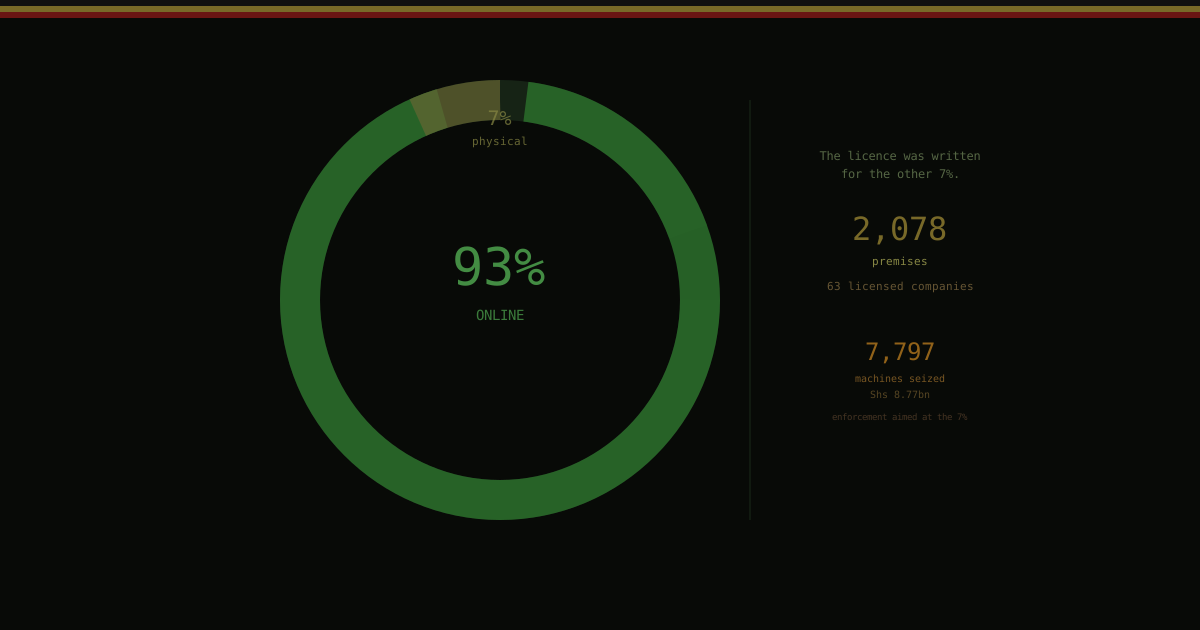
93% of Uganda's gambling happens online. The licence was written for the other 7%.
The numbers come from the regulator itself. NLGRB chief executive Denis Mudene Ngabirano put the split at 93 per cent online, 7 per cent in physical locations, and said the law in force was written when gaming operations were largely physical. Uganda has 63 licensed companies across 2,078 premises. The premises are the supervisory model. The activity is somewhere else.
The enforcement record shows what a premises-built regulator can reach. 7,797 illegal gaming machines confiscated in one year, worth about Shs8.77bn, many smuggled into the country disguised as computer and television spare parts and assembled locally. Equipment worth Shs6.21bn already destroyed. That is real work. It is also work aimed at the 7 per cent, because a machine has an address and a server in another jurisdiction does not.
The proposed amendment splits the single licence into separate online and physical licences, with the Solicitor General, the Ministry of Finance and Parliament in the process. For operators running both channels that means two licences, two fee schedules, two compliance stacks where there used to be one. Most will accept it without argument. The single licence was always a discount on supervision, and discounts on supervision get repriced.
The detail that matters sits at the end of the regulator's statement: a push for stronger monitoring systems to track gaming equipment and transactions. Uganda is heading where Burundi, Kenya and Gabon are already heading — a procured, vendor-built supervisory stack for an online-first market.
The law is catching up to where the market went six years ago. The monitoring system will define what the next licence actually costs.