Every iGaming layoff story follows the same pattern. Not bad luck. Not a market shift. A decision made 12-18 months earlier when the numbers looked good.
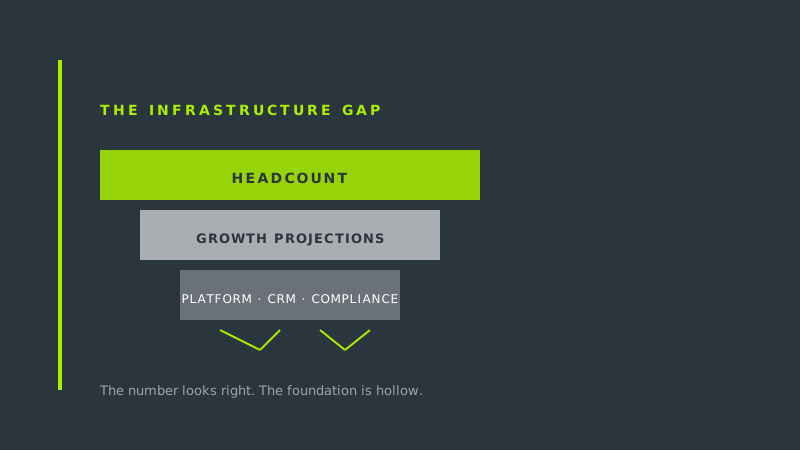
The sequence is consistent: a new market opens or a licensing framework softens, headcount scales up - compliance team, CRM team, local marketing - before any of the operational architecture is ready to support it. The KYC workflow is manual. The CRM is default. The retention model is "same as last market." The number looks right. The foundation is hollow.
Then the market tightens. A regulator adds a requirement. A tax structure changes. Player acquisition costs go up. And the 200-person operation built on the assumption that growth solves everything suddenly has to explain itself to a board that only ever saw the upside projections.
Operators who survive these cycles have something in common. It's not that they grew more carefully - plenty of careful operators have gone under. It's that they knew where the foundation was weak before the cycle turned. Not from caution. From actually running the numbers on what compliance architecture cost vs. what a regulatory fine cost. From CRM data that told them the retention model wasn't working six months before churn accelerated. From a platform integration that didn't obscure the real cost of the infrastructure until it was too late to exit.
The layoffs are not the story. They're the result. The story happened at the growth planning table when nobody asked what the infrastructure needed to look like before the headcount made sense.
Some of those conversations are recoverable. Most of them weren't.