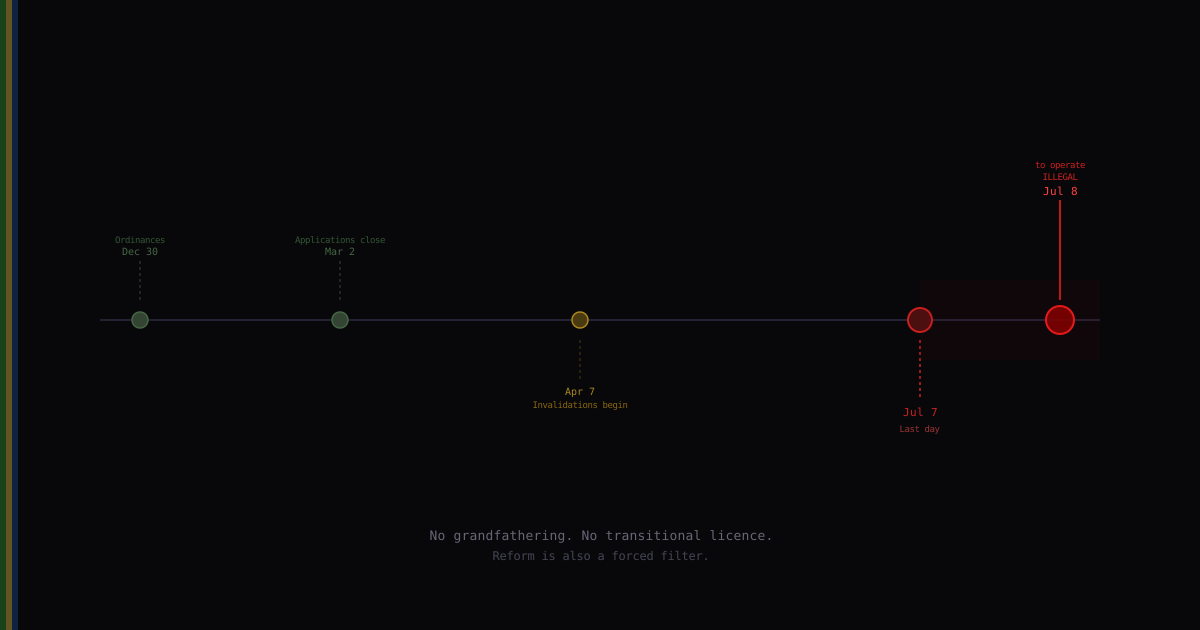
Every gambling licence issued in Gabon before 2026 is dead on July 8.
The GDJ, Gabon's new gambling regulator, runs the cleaner version of an African licensing reform. Two presidential ordinances on December 30 last year. A fresh framework. A March 2 cut-off for expressions of interest. A staggered invalidation that began April 7 and completes on July 7. The architecture is correct on paper.
What the architecture says in practice is that any operator who held a Gabonese licence under the old regime, did not file under the new one in time, and is still taking bets on July 8, is operating illegally. There is no grandfathering window. There is no transitional licence. The clock that started on April 7 is not a notice period. It is the exit ramp.
This is the part most operators evaluating Africa get wrong. They read "reform" and think the market is opening. They miss that reform is also a forced filter. The country that was easy to enter in 2024 is now the country where the regulator decided which incumbents survive. The decision was made on March 2 when applications closed.
The thinking behind it is recognisable. Gabon needs revenue, needs control over flows that were running through informal channels, needs to be ready before the FIFA World Cup pulls volume from this region too. The GDJ built itself by sunsetting what came before. New regulators do not consolidate by extending old licences. They consolidate by making old licences worth nothing.
The read-across is the part to keep watching. Mozambique has been running a similar consultation arc since late 2025. Senegal is restructuring its operator-tax architecture. Tanzania's online segment is up for review. The Gabon model, if it works, is a template. April expiry, July invalidation, regulator that gets to pick. It is not generous. It is efficient.
The operators waiting until July to decide whether to fight the deadline already decided they would not.